A picture of the iPad controlling the camera on the iPhone which took the picture of the iPad connected to the iPhone via the WiFi Camera – Remote iPhones app:


Passing clouds of inconsequential observations
A picture of the iPad controlling the camera on the iPhone which took the picture of the iPad connected to the iPhone via the WiFi Camera – Remote iPhones app:
A trip to RHS Bridgewater to see the recently completed Chinese Garden.

The gardens provided plenty of memorial benches to add to the Open Benches site – actually so many it became a challenge to find one that did not bear a commemorative plaque. One was notably nice:

There was also displays of photographs by Yan Wang Preston dotted through the woodland collectively known as Goose Poo & Rainbow. These showed objects that had been found whilst clearing the site for the garden. One intriguing picture was of a faded and charred piece of paper with the instructions to “Take your clothes off”.

Today the Language Log blog noted that that Trump fellow was thinking of nationalising boating (sorry: ‘nationalizing’ (had to wrestle with my spelling checker to get that)). They attributed the error to “poor-quality speech-to-text” (I assume) software. But in this age of all singing all dancing AI wonderfulness surely we should have cracked this problem by now.
When I watch a video and click the ‘full screen’ option I find the screen fills with some text seemingly automagically generated from the dialogue in the video. But it is usually so inaccurate that you have to wonder why they bother. I am not sure who “they” are. It could be coming from YouTube but to change the settings I now have to sign in to Google – so that is not going to happen. Or it could be from one of the numerous browser extensions I have blocking most of the nonsense that the web criminals developers keep trying to inflict on us. For example a video from the Piano Circus website produced this:
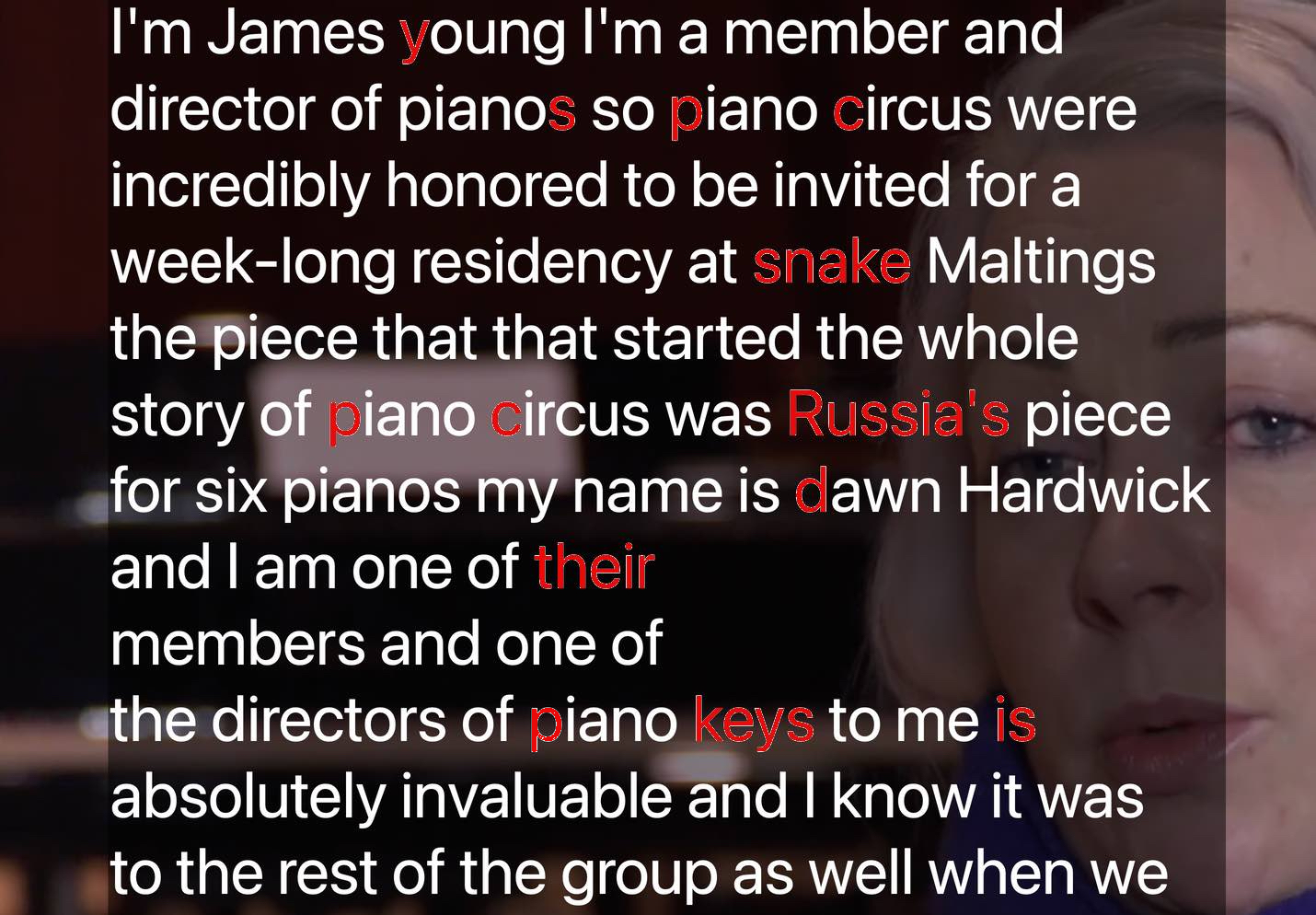
Ignoring the lack of punctuation and the American spelling I highlight some errors in red. Gibberish.
In 1964 Terry Riley composed ‘In C‘; a piece comprising 53 sections that should be played in order but any of which can be repeated. The piece ends when the last player has finished the 53rd section. Riley’s recording of the piece was released in 1968 following it in 1969 with A Rainbow In Curved Air – two records that a young chap at the time would enjoy very much.
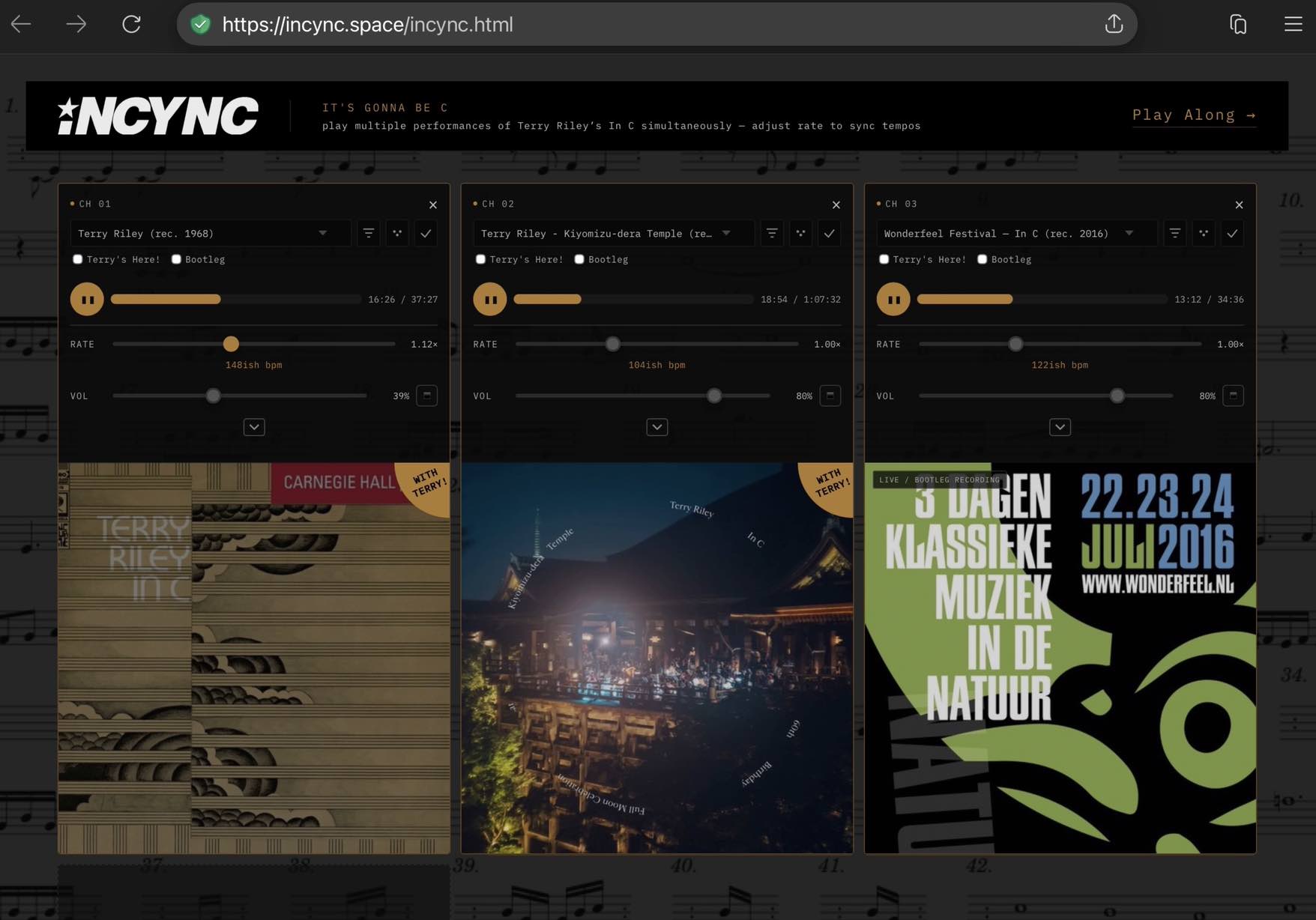
Today, in the post gramophone world, there is a webiste that gathers multiple recordings of In C and allows the visitor to enjoy them all at once. The site suggests adjusting the rate at which the recordings play so that they are all synchronised but I cannot imagine any sensible listener wanting to do that.
With another round of OS updates from Apple it is time to test some apps to check they still work. Inevitably there will be some that fail for some reason. This can be tolerable from individual developers; their life/career move on and their old apps become abandoned and eventually fail. But apps that have been purchased from major corporations should not be abandoned so readily. The TNR-i app, based on the original Tenori-on instrument from Yamaha, is one such. It was abandoned and withdrawn from the App Store in 2020; they warned “However, future iOS updates may cause TNR-i and TNR-e not to work.” The good news: it is still working…
Some research found that listening to stuff was helpful for older people. This may not have been what they had in mind.